How to Spot Fake News and Misinformation Online

Social media and messaging apps make it easy to share news in seconds, and that includes false stories, edited photos and AI-generated content. You do not need to be an expert to protect yourself. A few simple habits go a long way.

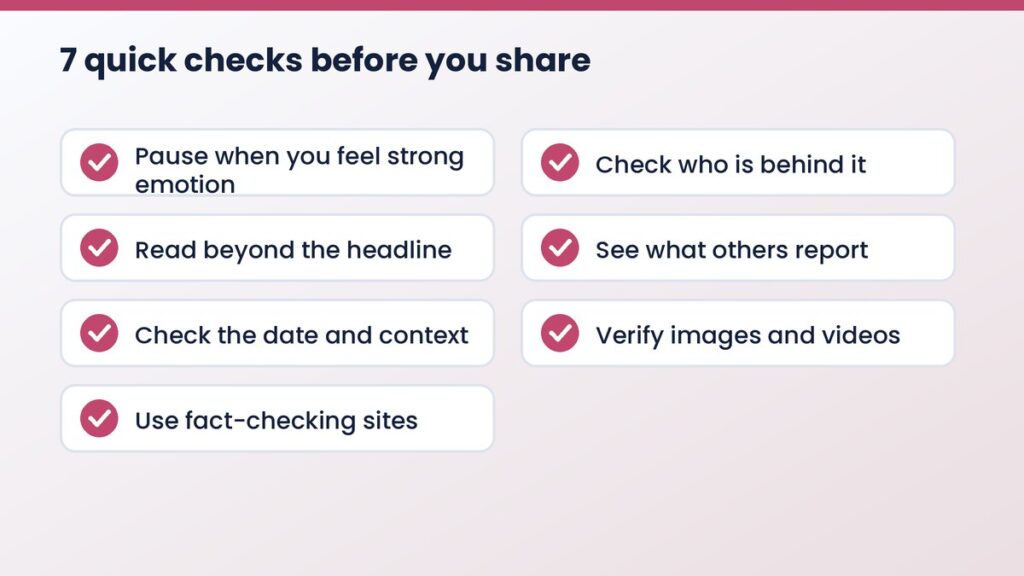
1. Pause when you feel strong emotion
Misinformation is designed to make you angry, scared or excited so that you share before thinking. If a post makes your heart race, that is the moment to stop and check.
2. Check who is behind it
Look at the account or website. Is it a known news outlet or an official organisation? Check the “About” page, the web address and how long the account has existed. Names that copy real brands with small spelling changes are a warning sign.
3. Read beyond the headline
Headlines can be misleading or have nothing to do with the article. Open the story, look for named sources and see whether the facts match the headline.
4. Check what others say
Open a new tab and search for the claim. Fact-checking is easier when you leave the page and see what trusted sources report. Researchers call this lateral reading, and professional fact-checkers use it all the time.
5. Check the date and context
Old stories and old photos often return as “new”. Look at the publication date, and ask whether a photo or video really shows what the caption says.
6. Verify images and videos
Use a reverse image search to find where a picture first appeared. Be careful with video too, because AI can create realistic images, voices and clips. Look for odd details, blurry edges and missing original sources.
7. Use fact-checking sites
Independent fact-checking organisations investigate viral claims. Search the claim along with the words “fact check” before you forward it.
Key takeaways
Pause, check the source, read the full story, compare with trusted outlets and verify images. If you cannot confirm something, do not share it. Being a careful reader helps everyone around you.