Contracts 101: What Makes an Agreement Legally Binding

We make agreements every day, from renting a flat to signing a job offer. But the law does not treat every promise as a binding contract. Understanding the basics helps you avoid problems and read documents with more confidence.

The key elements of a valid contract
Laws differ by country, but most legal systems look for similar elements. In India, for example, the Indian Contract Act, 1872 sets them out.
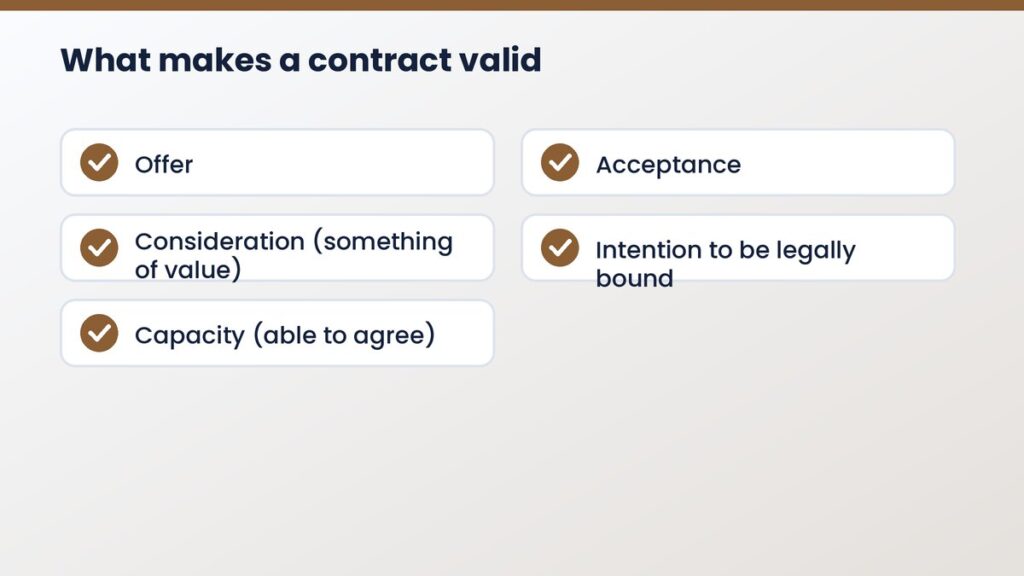
- Offer and acceptance: one party proposes terms and the other agrees to them.
- Consideration: each side gives or promises something of value, such as money for a service.
- Capacity: the people involved must be legally able to contract. Minors and people of unsound mind usually cannot.
- Free consent: agreement must not come from force, fraud, undue influence or serious mistake.
- Lawful object: the purpose must be legal. An agreement to do something illegal is not enforceable.
- Intention: the parties must mean to create legal obligations, which is why a casual social promise is usually not a contract.
Written or spoken?
Many contracts can be made orally, but proving what was agreed is much harder. Some types, such as certain property transactions, must be in writing by law. Putting the terms in writing protects everyone.
What to check before you sign
- Names and details: make sure the right people and companies are listed correctly.
- Price and payment dates: check amounts, deadlines and late fees.
- Duration and renewal: look for automatic renewals.
- Ending the contract: see how you can cancel and what penalties apply.
- Small print: read clauses about liability, disputes and changes to the terms.
What if someone breaks the contract?
Depending on the case, the other side may ask for performance of the promise, compensation for losses or cancellation of the agreement. Keep copies of all documents and messages, and try to resolve the issue in writing first.
Key takeaways
A valid contract needs agreement, value, capacity, free consent, a lawful purpose and an intention to be bound. Read before you sign, keep records and ask questions. This article is for general education and is not legal advice, so consult a qualified lawyer about your own situation.
This article is for general education and is not legal advice. Laws differ by country and change over time, so consult a qualified lawyer about your own situation.