Index Funds Explained for Beginners

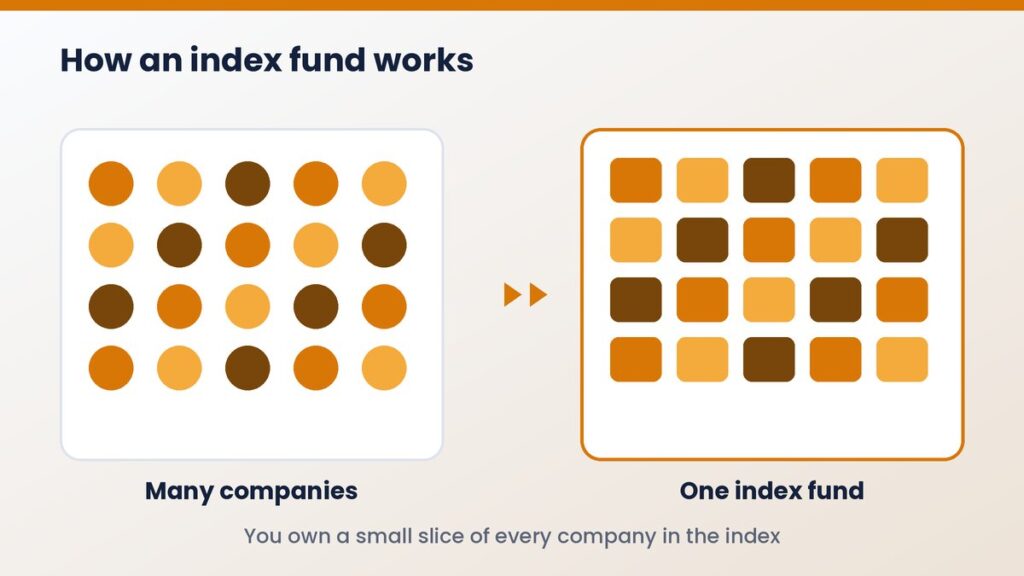
An index fund is a fund that tries to copy a market index, such as a list of the largest companies in a country. Instead of choosing individual companies, you own a small piece of many of them in one purchase.

How an index fund works
An index is a list of companies, for example the 50 or 500 biggest. The fund buys the same companies in the same proportions. When the index goes up or down, your fund follows it, minus a small fee.
Why people like them
- Diversification: your money is spread across many companies, so one bad company hurts less.
- Low cost: there is no team picking stocks, so fees are usually lower than in actively managed funds.
- Simplicity: one fund can cover a whole market.
Costs to check
Look for the expense ratio, the yearly fee as a percentage of your investment. A small difference, such as 0.2% against 1.5%, adds up over many years. Also check for entry fees, exit fees and taxes in your country.
The risks are real
Index funds are not safe from losses. If the market falls, your fund falls with it, and returns are never guaranteed. They are usually considered long-term investments, so money you need within a few years may belong somewhere safer.
Investing regularly
Many people invest a fixed amount every month, often called a systematic investment plan. This builds a habit and avoids trying to guess the best day to buy.
Common mistakes
- Investing money you may need soon
- Panic-selling when prices drop
- Chasing last year’s best performer
- Ignoring fees and taxes
Key takeaways
Index funds offer simple, low-cost diversification, but they still carry risk. Learn how they work, check the costs and invest only what you can leave alone for years. This article is general education, not personal financial advice.
This article is general information, not financial advice. Check your own situation or speak to a qualified adviser before making money decisions.