Budgeting Basics: A Simple Plan That Works (the 50/30/20 Rule)
Many people avoid budgeting because it sounds strict or complicated. A budget is simply a plan for your money, so you decide where it goes before it disappears. The 50/30/20 rule is one of the easiest ways to start.

What the 50/30/20 rule means
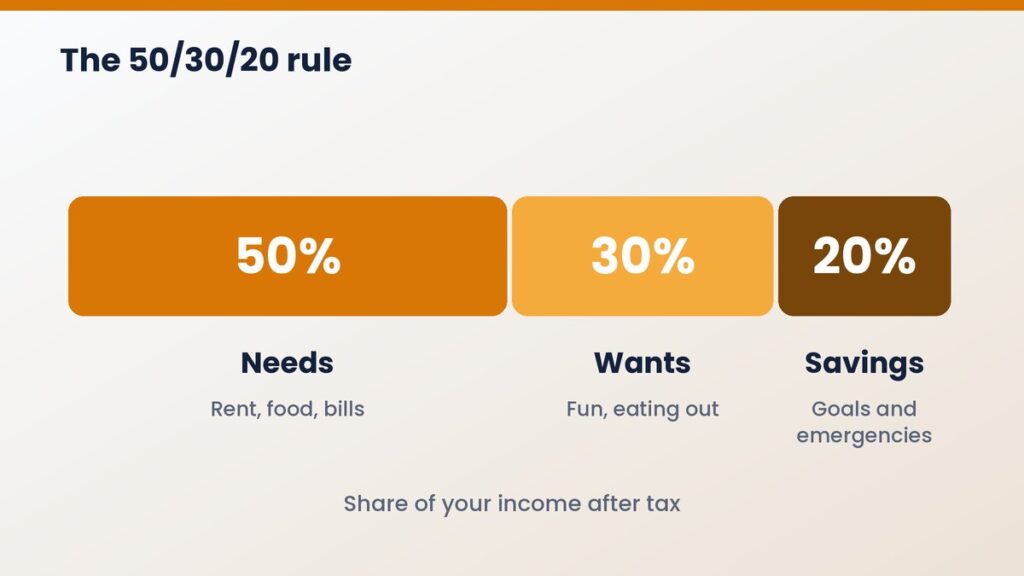
Split your take-home pay (the amount that reaches your bank account) into three parts:
- 50% for needs: rent, food, transport, bills, minimum loan payments.
- 30% for wants: eating out, streaming, hobbies, shopping, travel.
- 20% for savings and debt: emergency fund, investments and extra loan payments.
A simple example
If you take home 1,000 a month, the rule suggests about 500 for needs, 300 for wants and 200 for savings and debt. The currency does not matter. The proportions do.
How to set it up in four steps
- Find your take-home pay after tax and deductions.
- List your needs and add them up. If they are above 50%, look for ways to reduce them.
- Automate your savings so the money moves on payday before you can spend it.
- Review monthly and adjust. A budget is a tool, not a test.
Build an emergency fund first
A common guideline is to save three to six months of essential expenses for emergencies. If that feels far away, start with one small month and grow it over time.
When the rule does not fit
In expensive cities or on a low income, needs can take more than half your pay. That is normal. Use the rule as a guide and adjust the split, for example 60/20/20. What matters is that you have a plan and keep saving something.
Key takeaways
Track where your money goes, split it into needs, wants and savings, and automate the savings part. Small, regular steps beat a perfect plan that you never follow.
This article is general information, not financial advice. Check your own situation or speak to a qualified adviser before making money decisions.