Skills Employers Want in 2026 (and How to Build Them)

Technology is changing how work gets done, and employers are asking for a mix of human and digital skills. Reports such as the World Economic Forum’s Future of Jobs series regularly place analytical thinking, resilience and flexibility near the top of the list, along with growing demand for AI and data skills. Here is what that means for you.

The skills worth building
- Analytical thinking: breaking a problem down and using evidence to decide.
- Clear communication: writing and speaking so others understand quickly.
- Adaptability and learning agility: picking up new tools and ways of working.
- AI literacy: knowing what AI tools can and cannot do, and how to check their output.
- Data literacy: reading charts, spotting patterns and asking good questions of numbers.
- Collaboration: working well with people across teams and cultures.
- Ownership: finishing what you start without being chased.
Proof beats promises
Recruiters see thousands of CVs that say “hard-working team player”. What stands out is evidence: a small project, a report you wrote, a presentation you gave or a problem you solved. Certificates help, but real work you can show helps more.
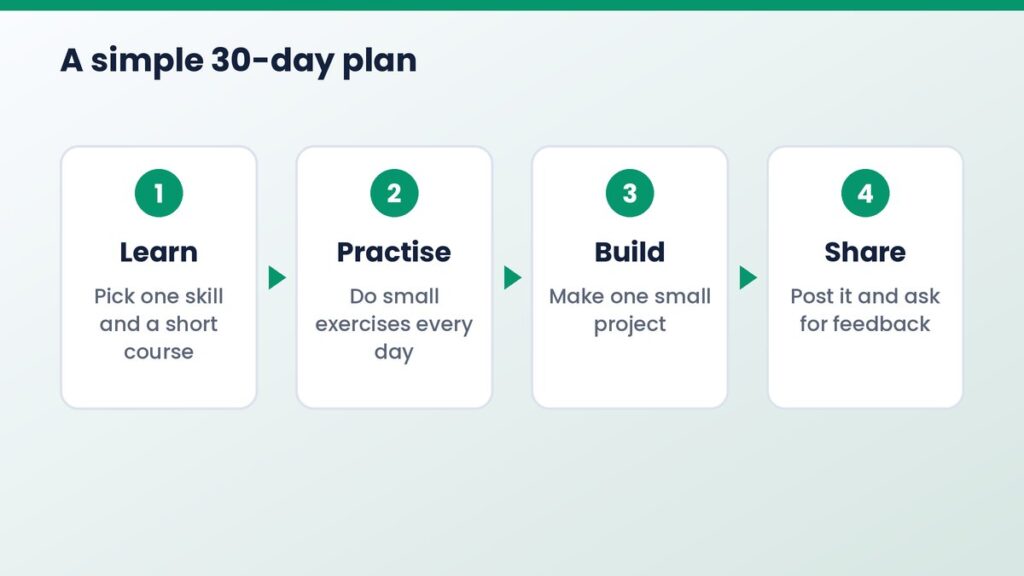
A simple 30-day plan
- Week 1: choose one target role and read five job descriptions. Note the skills that repeat.
- Week 2: pick the top two skills you lack and start a free course for each.
- Week 3: build one small project that uses them, even if it is only a one-page analysis.
- Week 4: publish it, add it to your CV and LinkedIn, and ask one person for feedback.
Do not ignore the basics
Strong time management, a polite follow-up email and a tidy CV still matter. Employers hire people they can rely on, so reliability is a skill too.
Key takeaways
You do not need to learn everything. Choose a direction, build two or three skills well, and show your work. Keep learning a little every week, because the list will keep changing.